
Rust Running Down the Chimney? Chase Cover Replacement in La Habra
Ask About Chimney Chase Cover
Say what the chimney or fireplace is doing and where the house is. The reply sets up the visit.
What the Work Involves
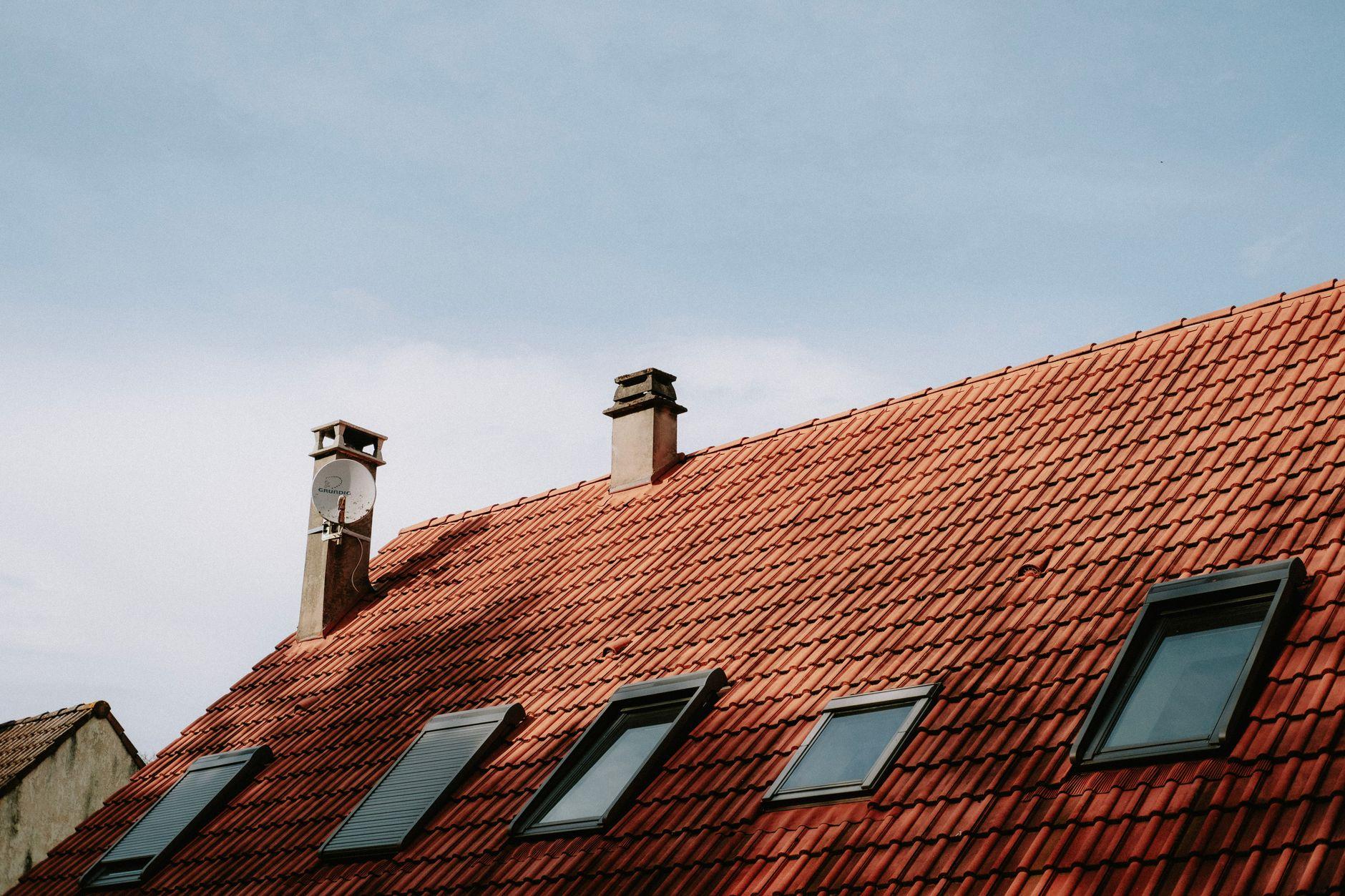
Orange streaks run down the stucco below the chimney top. Inside, the prefab fireplace has water marks or a rusted firebox ceiling. The cause sits out of sight: the flat metal lid over the framed enclosure has sagged, pooled water and rusted through at the seams. We remove it, check the framing underneath for rot, and fit a new stainless cover fabricated to the enclosure's dimensions, crowned so water runs off, with a sealed opening for the vent pipe.
The Chimney That Is Not Brick, and the Lid That Keeps It Dry
Many fireplaces in tract homes, townhomes and condominiums are not masonry. The firebox is a factory-made steel unit, and it vents through double-walled metal pipe. What looks like a chimney from the street is carpentry: a tall wooden frame, sheathed and finished in stucco or siding to match the walls, built to hide the pipe. Frame and finish need a lid, and the lid is a single sheet of metal laid across the top with a round opening for the pipe. Builders commonly used thin galvanized steel. Its zinc coating wears away with weather, the bare steel rusts, and the flat sheet sags between its edges so that rainwater ponds on it instead of draining. Ponded water speeds the rust until pinholes open. The first sign is on the outside of the house: orange-brown streaks running down the stucco from the top corners. The second is indoors: a stained ceiling close to the fireplace, rust across the firebox top or damper, or dripping heard inside the wall when it rains.
What makes a rusted lid urgent is what sits under it. The enclosure is hollow. Inside are wooden studs, sheathing, sometimes insulation, the metal pipe and, at the bottom, the steel shell of the fireplace. None of those is meant to get wet. Water through the lid soaks the upper framing first, then runs down the inside of the walls. Wood rots, stucco cracks and bulges as its backing swells, and the firebox shell and pipe joints rust from the outside in, where nobody sees them. So the visit looks at more than the sheet metal. On the roof we check the lid for rust, sag and holes, the fasteners, the joint where the pipe comes through, and the termination above it. We press on the sheathing around the rim for softness and study the stucco for cracks and staining. Indoors we examine the firebox top, the damper and the visible pipe for rust tracks. You get a written note of the condition, with the measurements, before any replacement is proposed.
A Cover Made for Your Chase, Quoted on Paper
A chase lid is not a stock item. Every enclosure is a slightly different rectangle, with the pipe opening in a slightly different spot, so a new cover is fabricated for the one it will sit on. We record the outside length and width of the top, the center and diameter of each pipe opening, and the depth of side needed to lap the finish. The cover is formed from stainless steel or another metal that will not rust, with creased panels that tip water toward the edges instead of letting it stand, and with folded sides ending in a drip hem that throws runoff clear of the stucco. Before it goes on, rotted sheathing at the top is renewed, as a new lid screwed to soft wood will not stay put in a Santa Ana wind. The cover is fastened through its sides, never through the flat top. A fitted collar sheds water around the pipe, and the termination is reinstalled or replaced with the manufacturer's part. The quote lists the cover by metal and gauge, the carpentry, the collar and the termination. There is no list price, since size and material set it.
Delay is expensive here in a particular way. A chase cover is a modest piece of sheet metal. What it protects is not modest. Rotted framing means opening the enclosure and rebuilding part of it. Damaged stucco means patching and repainting a tall, visible surface. And a factory-made fireplace whose shell or pipe has rusted through generally cannot be repaired piece by piece. It is a tested assembly, and serious corrosion means replacing the unit, which involves opening the wall around it. All of that can follow from a lid that showed rust streaks for several winters first. The streaks are the warning, and they come early enough to act on. Covers also fail together. In a development where every building got the same galvanized lids in the same year, they reach the end at about the same moment, and associations in La Habra and nearby cities can ask to have them surveyed as a group through our property manager page. For one home, send the contact form. Mention the streaks or stains you have seen and how many stories the building has.
How a Repair Runs With Us
Cause First
We find why it failed before we talk about the fix
Shown to You
Each fault photographed where it sits
Figure Up Front
The scope and its cost are on paper before work begins
Proof at the End
Pictures of the finished repair go to you with the notes
Where we do chimney chase cover
Choose your city to read how this service runs there: the local construction, the weather that wears on it and the faults we are asked about.
That search found no city. Try a different spelling or a neighboring one.
Other Repairs and Services
Chimney Sweep
Smoke spilling into the room or a tar smell from the hearth points to a coated flue, which a full sweep clears.
Signs and fix →Chimney Inspection
An odd smell, a stain or a weak draft gets traced to its cause and written up in plain findings with photos.
Signs and fix →Chimney Repair
Loose brick, crumbling joints, a tilting stack or water stains each trace back to a cause we find before fixing anything.
Signs and fix →Fireplace Inspection
Cracked firebrick, soot marks above the opening or a shifting hearth are read where they appear, at the fireplace itself.
Signs and fix →Fireplace Repair
A smoking fireplace, gapped firebrick, a jammed damper or broken doors get a diagnosis first and a lasting fix second.
Signs and fix →Chimney Level 2 Inspection
When a sale, a flue fire, a quake or a new appliance raises doubts, a camera shows what the flue walls look like.
Signs and fix →Chimney Cap Installation
Rain in the firebox, animal noise in the flue or a missing lid on the stack calls for a fitted cap.
Signs and fix →Chimney Flashing Repair
A ceiling stain next to the stack or lifted metal at the roofline usually means the roof-to-chimney seal has opened.
Signs and fix →Chimney Masonry Repair
Receding mortar, flaking brick faces and stair-step cracks mean water is working into the stack and the masonry needs repair.
Signs and fix →Chimney Rebuilds
A leaning stack, a shifted section at the roofline or brick falling away is past patching and needs rebuilding.
Signs and fix →Fireplace Cleaning
Caked ash, blackened doors and soot creeping over the face brick are cleared from the firebox and its surround.
Signs and fix →Gas Fireplace Cleaning
White film on the glass, soot on the logs or a dusty smell at start-up means the gas unit is due for cleaning.
Signs and fix →Gas Fireplace Repair
A pilot that drops out, a burner that refuses to fire or flames that quit mid-evening each point to a specific failed part.
Signs and fix →Fireplace Remodel
Cracked surrounds, loose hearth tile and a worn-out face are rebuilt so the fireplace is sound as well as better looking.
Signs and fix →Fireplace Inserts
A fireplace that pulls warm air out of the room and gives little back is a candidate for an insert.
Signs and fix →Pellet Stove Repair
No pellets dropping, no ignition, or a shutdown with a code on the display narrows a pellet stove fault to a few parts.
Signs and fix →Wood Stove Repair
Smoke puffing out at the door, a fire you cannot slow down or cracked glass means a wood stove has worn or failed parts.
Signs and fix →Gas Logs
Sooting logs, uneven flames or a wood fireplace you want on gas are handled with a properly matched and placed log set.
Signs and fix →Chimney Seismic Retrofit
A crack that appeared after shaking, or a tall unbraced brick stack, is a reason to assess and strengthen the chimney.
Signs and fix →Chimney Crown Repair
Cracks across the cement top of the stack or pieces of it on the roof let water into the brick below.
Signs and fix →Dryer Vent Cleaning
Clothes still damp after a full cycle, a hot dryer top or a lint smell signal a duct clogged along its run.
Signs and fix →Chimney Liner Installation
Broken flue tiles, an appliance venting into an oversized flue or smoke smell upstairs is solved with a new liner.
Signs and fix →Chimney Leak Repair
Water in the firebox, a stained chimney breast or rust on the damper means rain has found a way in.
Signs and fix →Chimney Waterproofing
Brick that stays dark for days after rain or grows a white crust is absorbing water and can be treated to shed it.
Signs and fix →Chimney Damper Repair
A handle that will not budge, a plate that will not close or a cold draft from the hearth means the damper has failed.
Signs and fix →