
Old Brick Chimney, New Crack at the Roofline? Seismic Retrofit in La Habra
Ask About Chimney Seismic Retrofit
Say what the chimney or fireplace is doing and where the house is. The reply sets up the visit.
What the Work Involves
After a tremor you notice a hairline running across the stack near the roof, or a sliver of daylight between chimney and siding. Unreinforced brick does not bend, and the length standing above the roof takes the worst of the motion. We assess the masonry first. If it is solid, we add steel anchoring and bracing to hold it to the structure. If it is not, the upper portion is rebuilt lighter. This area felt the 1987 Whittier Narrows quake.
Why Brick Chimneys Break Where They Do
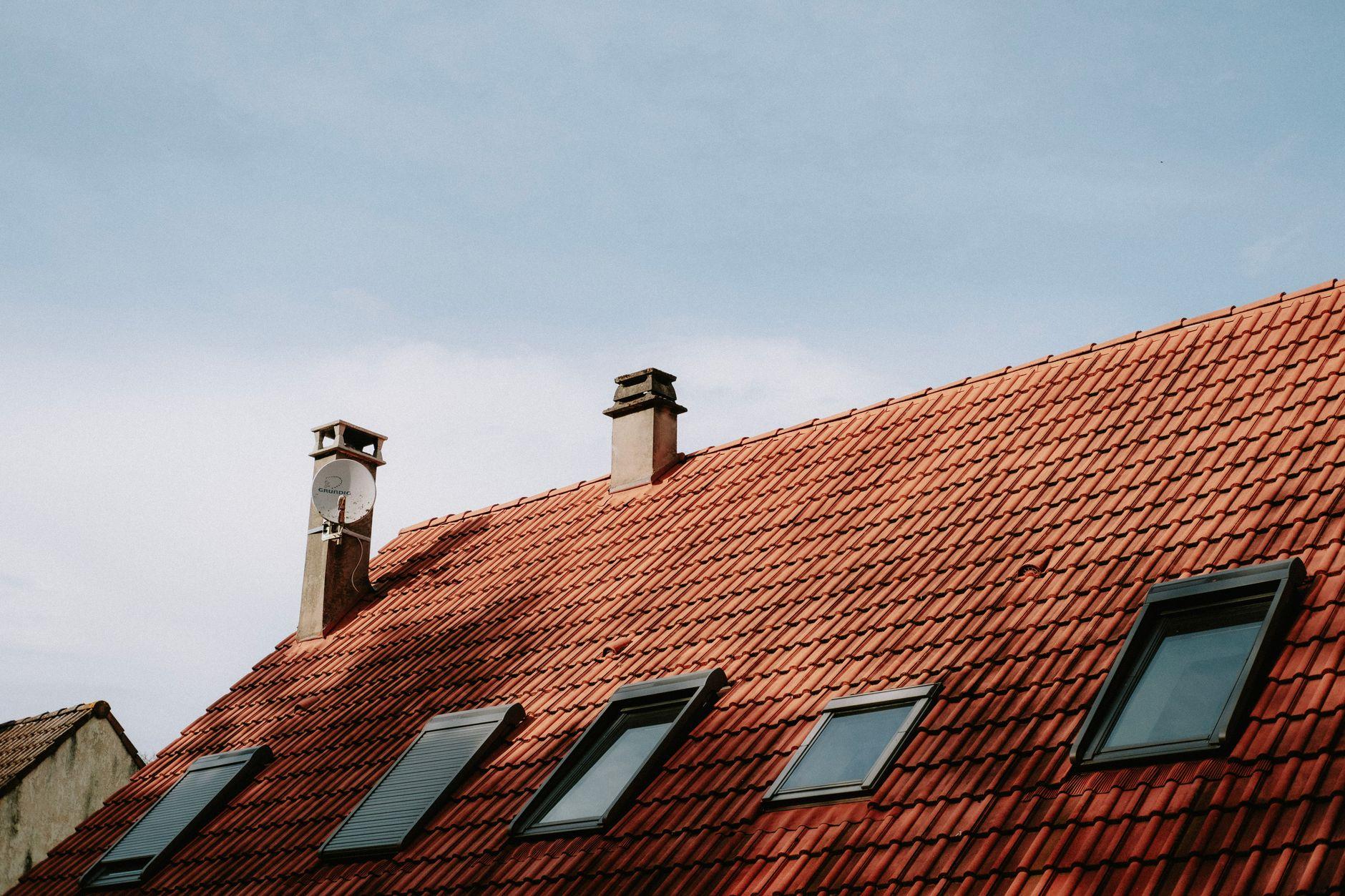
After an earthquake the damage to brick chimneys follows a script. A level crack runs around the stack right where it leaves the roof. The section above that line has rotated a few degrees, or shifted sideways on its bed, or it is lying in the yard. The reason is in how the two structures behave. A wood-framed house bends when the ground moves, then springs back. Masonry cannot bend. It is brittle, and the stack weighs as much as a small truck. Below the roof the house walls steady the brickwork on at least one side. Above the roof it stands alone, a freestanding pillar with shaking arriving at its base, and the roofline is where the steadying stops. That is the hinge. Chimneys put up before builders routinely placed steel inside the masonry and anchored it to the framing have nothing crossing that hinge except mortar, and old mortar has little grip left. Many houses in La Habra, Whittier and Norwalk still carry chimneys of that era.
This district has first-hand evidence. The Whittier Narrows earthquake of October 1987 broke chimneys street after street just up the road in Whittier, and in March 2014 a magnitude 5.1 earthquake centered near La Habra itself cracked more of them. A chimney that came through both is not proven safe. It may be carrying a crack hidden under paint, flashing or ivy. So a retrofit starts with an assessment, and the assessment decides whether there is anything worth restraining. On the roof we examine the exposed stack for cracks, lean and rotation, and probe the joints to see whether the mortar still binds. In the attic we look for how, or whether, the masonry is fastened to the house and whether daylight shows beside it. Where there are hints of damage inside the flue, a Level 2 inspection with video scan, $385, shows the liner from end to end. You receive the assessment in writing: what was found, what it means for the chimney in the next earthquake, and which of the approaches below suits it.
Bracing, Strapping or Shortening: The Options in Plain Terms
Restraint comes in three general forms, and they can be combined. Bracing gives the exposed stack a partner. Steel members are fixed near the upper portion of the chimney and carried back to anchor points in the roof structure, so the masonry above the hinge is no longer standing by itself. Strapping works lower down. Steel collars are fitted around the chimney at the levels where floors, ceilings and the roof meet it, and fastened into the house framing, so the brickwork and the building move as one. The third approach removes the hazard instead of restraining it. The brick is dismantled to roof level or just under, and where the fireplace is to stay in use a lightweight metal flue is carried up inside a framed enclosure finished to suit the house. There is far less weight overhead and nothing brittle above the hinge. Which form fits follows from the assessment. Restraint is the wrong tool for masonry that has already failed: steel bolted to crumbling brick restrains nothing, so repair or a partial rebuild comes first there.
The written quote follows the assessment line by line. It states the findings, names the approach we recommend and why, and lists the steel and anchors, any masonry repair that has to precede them, the roofing and flashing work around new attachments, and whether engineering or a permit applies to your job. Where more than one approach is workable, each is priced so you can compare a braced original chimney against a shortened one. Seismic work has no fixed price on this site. A single-story stack that needs two braces and a three-story chimney that needs dismantling are not the same purchase, and a figure given before the roof visit would be invented. One thing no quote from us will contain is a promise that a chimney is earthquake-proof. Retrofitting lowers the odds of collapse and reduces what can fall. Waiting costs nothing until the day the ground moves, and then it costs whatever sits under the chimney: a roof, a car, a walkway. To arrange an assessment, send the contact form with roughly how old the house is and anything you have noticed.
How a Repair Runs With Us
Cause First
We find why it failed before we talk about the fix
Shown to You
Each fault photographed where it sits
Figure Up Front
The scope and its cost are on paper before work begins
Proof at the End
Pictures of the finished repair go to you with the notes
Where we do chimney seismic retrofit
Choose your city to read how this service runs there: the local construction, the weather that wears on it and the faults we are asked about.
That search found no city. Try a different spelling or a neighboring one.
Other Repairs and Services
Chimney Sweep
Smoke spilling into the room or a tar smell from the hearth points to a coated flue, which a full sweep clears.
Signs and fix →Chimney Inspection
An odd smell, a stain or a weak draft gets traced to its cause and written up in plain findings with photos.
Signs and fix →Chimney Repair
Loose brick, crumbling joints, a tilting stack or water stains each trace back to a cause we find before fixing anything.
Signs and fix →Fireplace Inspection
Cracked firebrick, soot marks above the opening or a shifting hearth are read where they appear, at the fireplace itself.
Signs and fix →Fireplace Repair
A smoking fireplace, gapped firebrick, a jammed damper or broken doors get a diagnosis first and a lasting fix second.
Signs and fix →Chimney Level 2 Inspection
When a sale, a flue fire, a quake or a new appliance raises doubts, a camera shows what the flue walls look like.
Signs and fix →Chimney Cap Installation
Rain in the firebox, animal noise in the flue or a missing lid on the stack calls for a fitted cap.
Signs and fix →Chimney Flashing Repair
A ceiling stain next to the stack or lifted metal at the roofline usually means the roof-to-chimney seal has opened.
Signs and fix →Chimney Masonry Repair
Receding mortar, flaking brick faces and stair-step cracks mean water is working into the stack and the masonry needs repair.
Signs and fix →Chimney Rebuilds
A leaning stack, a shifted section at the roofline or brick falling away is past patching and needs rebuilding.
Signs and fix →Fireplace Cleaning
Caked ash, blackened doors and soot creeping over the face brick are cleared from the firebox and its surround.
Signs and fix →Gas Fireplace Cleaning
White film on the glass, soot on the logs or a dusty smell at start-up means the gas unit is due for cleaning.
Signs and fix →Gas Fireplace Repair
A pilot that drops out, a burner that refuses to fire or flames that quit mid-evening each point to a specific failed part.
Signs and fix →Fireplace Remodel
Cracked surrounds, loose hearth tile and a worn-out face are rebuilt so the fireplace is sound as well as better looking.
Signs and fix →Fireplace Inserts
A fireplace that pulls warm air out of the room and gives little back is a candidate for an insert.
Signs and fix →Pellet Stove Repair
No pellets dropping, no ignition, or a shutdown with a code on the display narrows a pellet stove fault to a few parts.
Signs and fix →Wood Stove Repair
Smoke puffing out at the door, a fire you cannot slow down or cracked glass means a wood stove has worn or failed parts.
Signs and fix →Gas Logs
Sooting logs, uneven flames or a wood fireplace you want on gas are handled with a properly matched and placed log set.
Signs and fix →Chimney Crown Repair
Cracks across the cement top of the stack or pieces of it on the roof let water into the brick below.
Signs and fix →Dryer Vent Cleaning
Clothes still damp after a full cycle, a hot dryer top or a lint smell signal a duct clogged along its run.
Signs and fix →Chimney Liner Installation
Broken flue tiles, an appliance venting into an oversized flue or smoke smell upstairs is solved with a new liner.
Signs and fix →Chimney Leak Repair
Water in the firebox, a stained chimney breast or rust on the damper means rain has found a way in.
Signs and fix →Chimney Waterproofing
Brick that stays dark for days after rain or grows a white crust is absorbing water and can be treated to shed it.
Signs and fix →Chimney Damper Repair
A handle that will not budge, a plate that will not close or a cold draft from the hearth means the damper has failed.
Signs and fix →Chimney Chase Cover
Rust trails down the siding of a framed chimney or water inside a prefab firebox points to a failed metal top.
Signs and fix →