
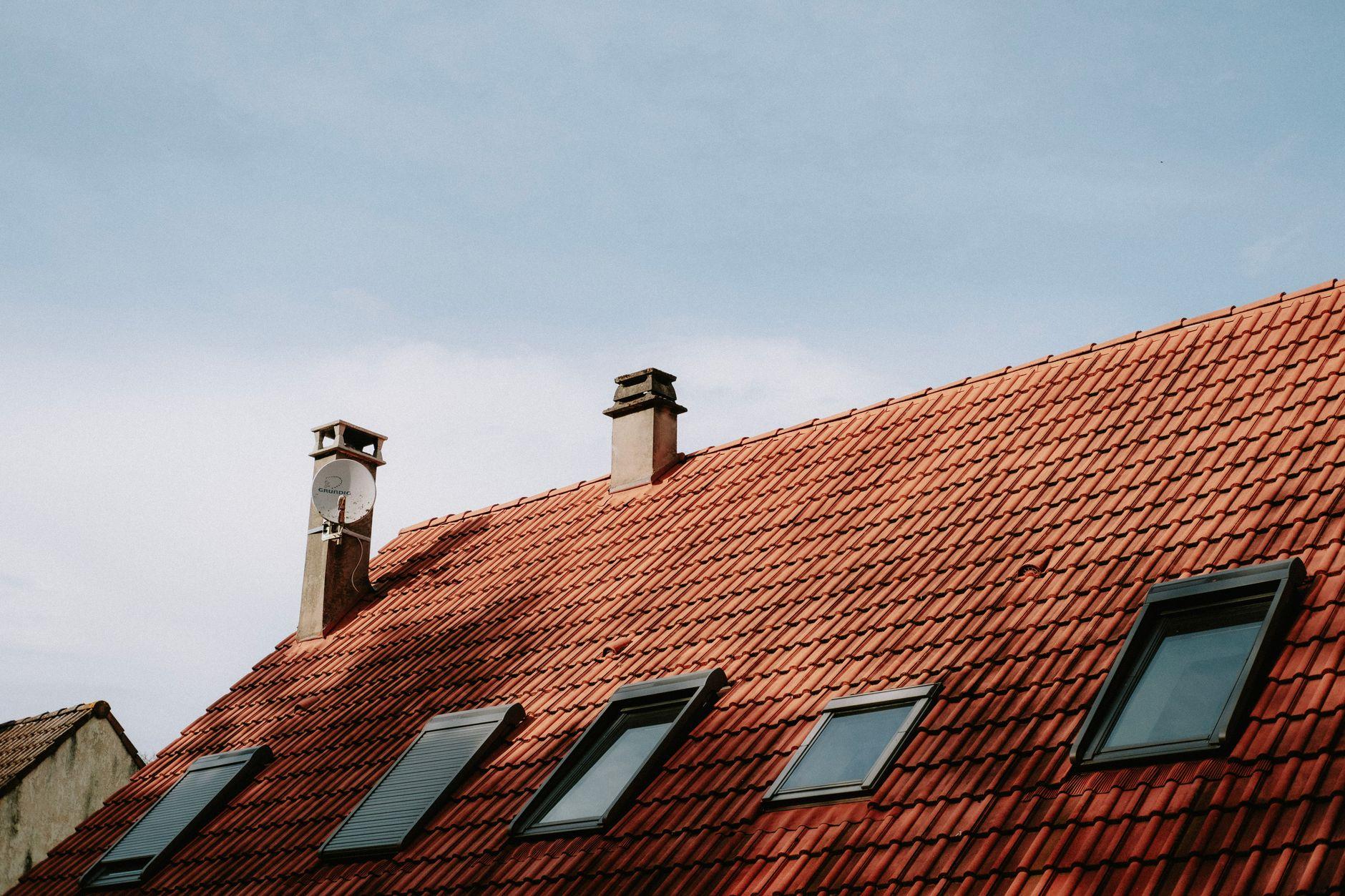
Water Coming In at the Chimney? Leak Repair in La Habra
Ask About Chimney Leak Repair
Say what the chimney or fireplace is doing and where the house is. The reply sets up the visit.
What the Work Involves
A drip on the grate during a storm. Brown rings on the plaster. A damper gone orange with rust. The water you see inside rarely enters where it appears, so the first job is finding the entry point: an open flue top, a split crown, tired flashing or brick that soaks like a sponge. We inspect each of those, then repair the one that is letting water through. Chimney leak repair runs $550 to $3,300.
Why the Stain Is Rarely Under the Hole
Water obeys gravity and surface tension, not straight lines. It enters at one point, clings to a rafter, a pipe or the back of the brickwork, travels, and drips where it finally lets go. So the mark on your ceiling tells us that a leak exists, and only roughly where to begin. The location of the symptom does narrow things. Water or rust in the firebox itself, or drips heard in the flue during rain, point to the very top: a missing cap or a broken crown. A ceiling mark close to the chimney points first to the metal where roof and chimney meet, and second to a saturated stack bleeding water inward. Damp on the wall midway up a chimney breast, with no roof nearby, suggests brick and mortar that are absorbing rain. A musty attic with a clean ceiling below means the entry is above the roofline and the water has not yet found a route down. And a leak that appears only in wind-driven storms tells us which face of the chimney to study.
Tracing runs from the symptom back to the source. Indoors we map the staining and take moisture readings to find the wettest point. In the attic we follow water marks on the framing and sheathing toward their origin, which is often several feet from the ceiling stain. On the roof every candidate gets examined: cap, crown, mortar joints, brick faces, the metalwork at the roof joint, the sealant lines, the roofing immediately around the stack. When the evidence is ambiguous, controlled wetting settles it. A person stays indoors watching the stained area while water is run over the chimney in zones, beginning with the lowest and pausing between each, until the first drop appears. That zone is the entry. Very often there are two, a cracked crown and tired flashing for instance, and fixing only the obvious one is the usual reason a chimney still leaks after a repair. The finding is given to you in writing: where water enters, by what path it reaches the stain, and what each entry point needs.
What the Published Price Covers and Why Speed Matters
Chimney leak repair on this site is priced at $550 to $3,300. A job lands in the lower part of that span when there is a single entry point that is easy to reach, such as a failed sealant line or a short length of metal to reset on a single-story roof. It lands in the upper part when the finding calls for several repairs at once, or for substantial new metal or masonry on a tall or steep roof. Some causes carry their own published figures. Adding a cricket behind the chimney is $440 to $990. When the cricket is built along with complete new flashing, the figure is $660 to $1,650. A cap is quoted on site. Crowns and relining are measured and priced individually. Whatever the mix, the written quote ties each line to an entry point named in the finding, so every dollar is attached to water it stops. And if tracing shows the water is getting in through the roofing and not the chimney, the finding says that plainly and you take it to a roofer.
With leaks, time is the multiplier. The first wet season stains paint. The second swells drywall and rusts the damper and the firebox. After that the framing beside the chimney stays damp long enough to rot, insulation mats down and stops insulating, and mold settles in where no one looks. The repair that would have stopped the water costs the same as before. Everything the water has ruined is now added to it, and little of that is chimney work. The climate here disguises the problem, too. Months without rain let the stain dry and fade, and it is easy to decide the leak has cured itself. It has not. It is waiting for the next storm, and the first big storm of winter is also when everyone else calls. Dry weather is the better season to trace and repair, since sealants, mortar and roofing all cure properly then. To start, send the contact form. Say which room shows the damage, how high on the wall or ceiling it is, and what kind of storm brings it out.
How a Repair Runs With Us
Cause First
We find why it failed before we talk about the fix
Shown to You
Each fault photographed where it sits
Figure Up Front
The scope and its cost are on paper before work begins
Proof at the End
Pictures of the finished repair go to you with the notes
Where we do chimney leak repair
Choose your city to read how this service runs there: the local construction, the weather that wears on it and the faults we are asked about.
That search found no city. Try a different spelling or a neighboring one.
Other Repairs and Services
Chimney Sweep
Smoke spilling into the room or a tar smell from the hearth points to a coated flue, which a full sweep clears.
Signs and fix →Chimney Inspection
An odd smell, a stain or a weak draft gets traced to its cause and written up in plain findings with photos.
Signs and fix →Chimney Repair
Loose brick, crumbling joints, a tilting stack or water stains each trace back to a cause we find before fixing anything.
Signs and fix →Fireplace Inspection
Cracked firebrick, soot marks above the opening or a shifting hearth are read where they appear, at the fireplace itself.
Signs and fix →Fireplace Repair
A smoking fireplace, gapped firebrick, a jammed damper or broken doors get a diagnosis first and a lasting fix second.
Signs and fix →Chimney Level 2 Inspection
When a sale, a flue fire, a quake or a new appliance raises doubts, a camera shows what the flue walls look like.
Signs and fix →Chimney Cap Installation
Rain in the firebox, animal noise in the flue or a missing lid on the stack calls for a fitted cap.
Signs and fix →Chimney Flashing Repair
A ceiling stain next to the stack or lifted metal at the roofline usually means the roof-to-chimney seal has opened.
Signs and fix →Chimney Masonry Repair
Receding mortar, flaking brick faces and stair-step cracks mean water is working into the stack and the masonry needs repair.
Signs and fix →Chimney Rebuilds
A leaning stack, a shifted section at the roofline or brick falling away is past patching and needs rebuilding.
Signs and fix →Fireplace Cleaning
Caked ash, blackened doors and soot creeping over the face brick are cleared from the firebox and its surround.
Signs and fix →Gas Fireplace Cleaning
White film on the glass, soot on the logs or a dusty smell at start-up means the gas unit is due for cleaning.
Signs and fix →Gas Fireplace Repair
A pilot that drops out, a burner that refuses to fire or flames that quit mid-evening each point to a specific failed part.
Signs and fix →Fireplace Remodel
Cracked surrounds, loose hearth tile and a worn-out face are rebuilt so the fireplace is sound as well as better looking.
Signs and fix →Fireplace Inserts
A fireplace that pulls warm air out of the room and gives little back is a candidate for an insert.
Signs and fix →Pellet Stove Repair
No pellets dropping, no ignition, or a shutdown with a code on the display narrows a pellet stove fault to a few parts.
Signs and fix →Wood Stove Repair
Smoke puffing out at the door, a fire you cannot slow down or cracked glass means a wood stove has worn or failed parts.
Signs and fix →Gas Logs
Sooting logs, uneven flames or a wood fireplace you want on gas are handled with a properly matched and placed log set.
Signs and fix →Chimney Seismic Retrofit
A crack that appeared after shaking, or a tall unbraced brick stack, is a reason to assess and strengthen the chimney.
Signs and fix →Chimney Crown Repair
Cracks across the cement top of the stack or pieces of it on the roof let water into the brick below.
Signs and fix →Dryer Vent Cleaning
Clothes still damp after a full cycle, a hot dryer top or a lint smell signal a duct clogged along its run.
Signs and fix →Chimney Liner Installation
Broken flue tiles, an appliance venting into an oversized flue or smoke smell upstairs is solved with a new liner.
Signs and fix →Chimney Waterproofing
Brick that stays dark for days after rain or grows a white crust is absorbing water and can be treated to shed it.
Signs and fix →Chimney Damper Repair
A handle that will not budge, a plate that will not close or a cold draft from the hearth means the damper has failed.
Signs and fix →Chimney Chase Cover
Rust trails down the siding of a framed chimney or water inside a prefab firebox points to a failed metal top.
Signs and fix →