
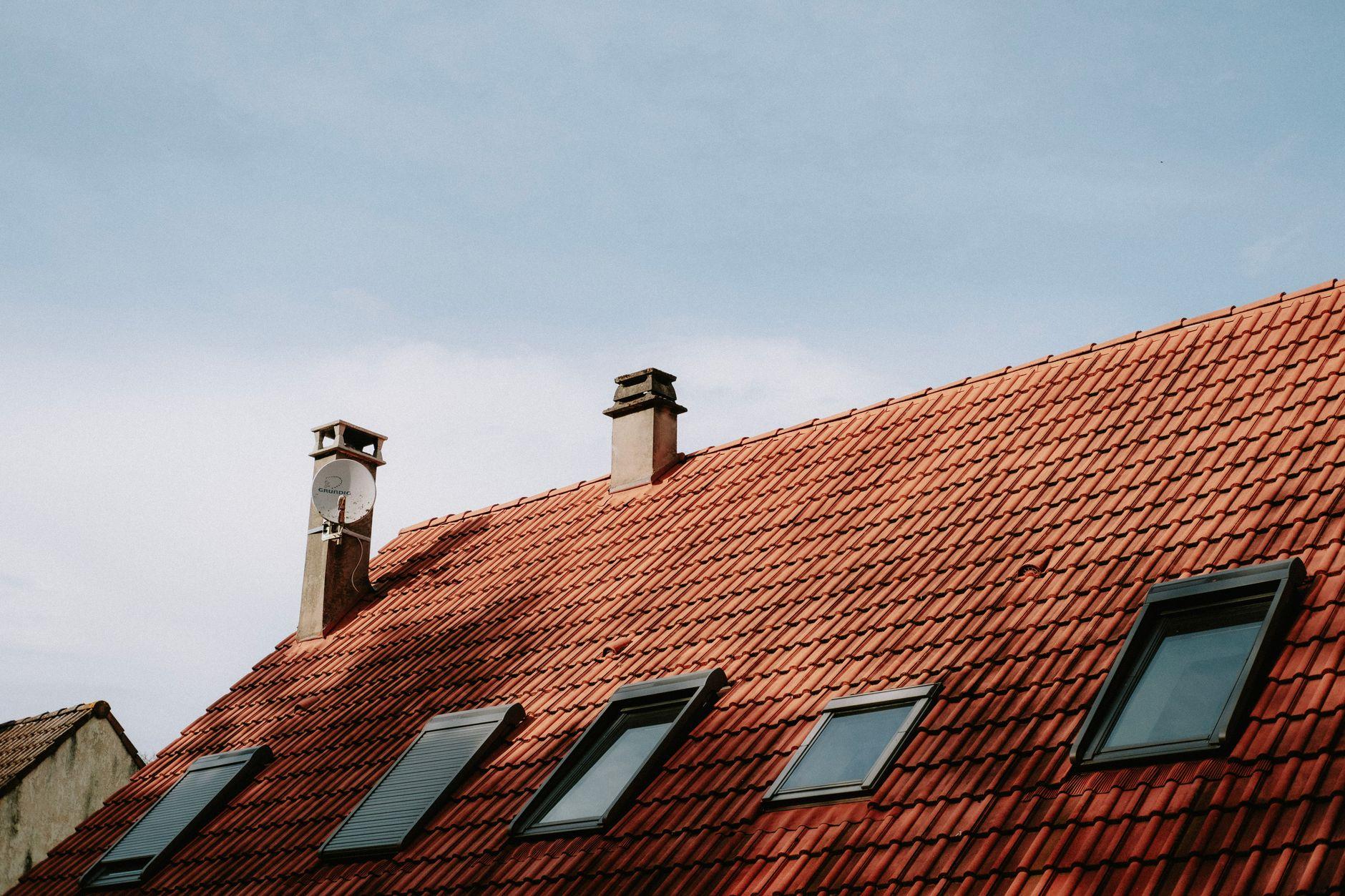
Water or Wildlife in the Flue? A Chimney Cap for Your La Habra Home
Ask About Chimney Cap Installation
Say what the chimney or fireplace is doing and where the house is. The reply sets up the visit.
What the Work Involves
Water dripping onto the grate after a storm, twigs on the smoke shelf, a flutter of wings behind the damper: these point to an open or failed flue top. We measure the flue or the whole crown, fit a cap with a mesh screen and fasten it against wind. An installed cap is quoted after we measure. Flue size, the number of flues under one cap and the metal chosen set the price. An open flue takes water every storm.
Four Signs the Top of Your Flue Is Open or Failing
You can usually tell a flue is uncapped without climbing anything. After a storm there are wet spots or a rust-colored puddle on the firebox floor. In spring you hear scratching or chirping above the damper, since a dark vertical shaft looks like a hollow tree to a bird or a raccoon. Dry leaves and twigs appear in the grate with no fire lit. Or there is a cap up there already, and it bangs when the wind gets under it, which means its fasteners have rusted and it is one gust from landing in the yard. Each of those is the same fault: nothing sound is covering the hole at the top of the chimney. A flue is a pipe pointed at the sky. Left open, it takes in every storm, and the water does not stay in the firebox. It runs down the liner, soaks the smoke shelf, rusts the damper and wets the soot into an acidic paste that works on the mortar. Nesting material is worse in a different way, since it blocks the flue and it burns.
A cap is a small part with three jobs. Its lid sheds rain. Its mesh sides keep animals and windblown debris out. That mesh also holds back live embers that would otherwise settle on shingles or dry brush, which matters in a region that sees Santa Ana winds each fall. Getting those three jobs done depends on fit. On the roof we measure the flue opening, record how far the liner rises above the crown, if it rises at all, tally the flues and study the outline of the top. A single clay flue with a clean projecting edge takes a cap that grips the tile. Two flues side by side, or a top with no projecting tile, call for a larger cap fixed to the crown that spans everything. A metal chimney from a prefabricated fireplace has to take the cap its manufacturer specifies, since air moves between the walls of that pipe and a generic lid can block it. Fitted, a cap is quoted after we measure. A single-flue cap of standard size is the simplest job. A large multi-flue cover made to order costs the most.
What We Check While We Are Up There, and the Cost of Going Without
A cap job puts us on the highest point of your chimney, so we use the trip. The crown, the sloped mortar or concrete surface around the flue, gets a close look, since a cap bolted to a crumbling crown will not stay put and will not stop the water coming through the cracks beside it. A crown that needs work is reported ahead of any cap fitting, with a written price for the repair, and you choose whether to do both at once. We look down the flue for nests and blockages, and if something is living in there the cap waits until the flue is clear. We also check the top few courses of brick and the mortar between them, the part of any chimney that weathers fastest. None of this is an inspection in the formal sense. For that, a Level 1 visit costs $160 and can be booked for the same trip. It is simply what a careful installer sees from that position, written down for you.
Going without a cap is one of the more expensive ways to save a few hundred dollars. One wet winter with an open flue can rust a throat damper past saving. Water sitting on the smoke shelf seeps into the masonry behind the firebox and shows up later as a stain on a wall that seems to have nothing to do with the chimney. A nest that goes unnoticed until the first fire of the season fills the room with smoke at the very least. And removing animals, then cleaning what they leave, costs more than keeping them out would have. Older houses in La Habra and Whittier often still carry the original cap, or none, and the metal chimneys found on many later tract houses lose caps to rust at the seams. If yours is missing, loose or visibly rusted, send the form on the contact page. Tell us how many flue openings you can count from the yard and what the roof is like to walk on, steep, tile, two stories, so we arrive with the right ladder and the right stock.
How a Repair Runs With Us
Cause First
We find why it failed before we talk about the fix
Shown to You
Each fault photographed where it sits
Figure Up Front
The scope and its cost are on paper before work begins
Proof at the End
Pictures of the finished repair go to you with the notes
Where we do chimney cap installation
Choose your city to read how this service runs there: the local construction, the weather that wears on it and the faults we are asked about.
CA
La Habra chimney cap installation
See a crack stepping up the brick like a staircase? In La Habra, where 77% of homes predate 1980, that points to worn mortar or old quake movement. We repoint those joints now, because a loose course only gets looser.
Read the local pageCA
Whittier chimney cap installation
A chimney leaning off the roofline, or a gap wide enough for a finger, points to brick laid before modern seismic rules. The bungalows around Greenleaf Avenue are that age. We brace or rebuild from the roof up before another shake decides the matter.
Read the local pageCA
Norwalk chimney cap installation
Brown water marks on the ceiling beside the fireplace wall usually trace to flashing, not shingles. Norwalk's dairy land turned into tract streets mainly during the 1950s, and that metal is tired. We cut in new flashing and seal it before drywall and framing soak.
Read the local pageCA
Cerritos chimney cap installation
Rust streaks down the stucco? The metal cover up top has failed. Most Cerritos homes are detached tract houses, and one built in the 1970s or later likely vents by a metal flue boxed inside framing. We fit a sloped new cover before that framing rots.
Read the local pageOther Repairs and Services
Chimney Sweep
Smoke spilling into the room or a tar smell from the hearth points to a coated flue, which a full sweep clears.
Signs and fix →Chimney Inspection
An odd smell, a stain or a weak draft gets traced to its cause and written up in plain findings with photos.
Signs and fix →Chimney Repair
Loose brick, crumbling joints, a tilting stack or water stains each trace back to a cause we find before fixing anything.
Signs and fix →Fireplace Inspection
Cracked firebrick, soot marks above the opening or a shifting hearth are read where they appear, at the fireplace itself.
Signs and fix →Fireplace Repair
A smoking fireplace, gapped firebrick, a jammed damper or broken doors get a diagnosis first and a lasting fix second.
Signs and fix →Chimney Level 2 Inspection
When a sale, a flue fire, a quake or a new appliance raises doubts, a camera shows what the flue walls look like.
Signs and fix →Chimney Flashing Repair
A ceiling stain next to the stack or lifted metal at the roofline usually means the roof-to-chimney seal has opened.
Signs and fix →Chimney Masonry Repair
Receding mortar, flaking brick faces and stair-step cracks mean water is working into the stack and the masonry needs repair.
Signs and fix →Chimney Rebuilds
A leaning stack, a shifted section at the roofline or brick falling away is past patching and needs rebuilding.
Signs and fix →Fireplace Cleaning
Caked ash, blackened doors and soot creeping over the face brick are cleared from the firebox and its surround.
Signs and fix →Gas Fireplace Cleaning
White film on the glass, soot on the logs or a dusty smell at start-up means the gas unit is due for cleaning.
Signs and fix →Gas Fireplace Repair
A pilot that drops out, a burner that refuses to fire or flames that quit mid-evening each point to a specific failed part.
Signs and fix →Fireplace Remodel
Cracked surrounds, loose hearth tile and a worn-out face are rebuilt so the fireplace is sound as well as better looking.
Signs and fix →Fireplace Inserts
A fireplace that pulls warm air out of the room and gives little back is a candidate for an insert.
Signs and fix →Pellet Stove Repair
No pellets dropping, no ignition, or a shutdown with a code on the display narrows a pellet stove fault to a few parts.
Signs and fix →Wood Stove Repair
Smoke puffing out at the door, a fire you cannot slow down or cracked glass means a wood stove has worn or failed parts.
Signs and fix →Gas Logs
Sooting logs, uneven flames or a wood fireplace you want on gas are handled with a properly matched and placed log set.
Signs and fix →Chimney Seismic Retrofit
A crack that appeared after shaking, or a tall unbraced brick stack, is a reason to assess and strengthen the chimney.
Signs and fix →Chimney Crown Repair
Cracks across the cement top of the stack or pieces of it on the roof let water into the brick below.
Signs and fix →Dryer Vent Cleaning
Clothes still damp after a full cycle, a hot dryer top or a lint smell signal a duct clogged along its run.
Signs and fix →Chimney Liner Installation
Broken flue tiles, an appliance venting into an oversized flue or smoke smell upstairs is solved with a new liner.
Signs and fix →Chimney Leak Repair
Water in the firebox, a stained chimney breast or rust on the damper means rain has found a way in.
Signs and fix →Chimney Waterproofing
Brick that stays dark for days after rain or grows a white crust is absorbing water and can be treated to shed it.
Signs and fix →Chimney Damper Repair
A handle that will not budge, a plate that will not close or a cold draft from the hearth means the damper has failed.
Signs and fix →Chimney Chase Cover
Rust trails down the siding of a framed chimney or water inside a prefab firebox points to a failed metal top.
Signs and fix →